
Student Defense President Aaron Ament Testifies on Capitol Hill, Highlights Student Loan Borrower Struggles
FOR IMMEDIATE RELEASE
September 17, 2026
MEDIA CONTACT
Student Defense President Aaron Ament Testifies on Capitol Hill, Highlights Student Loan Borrower Struggles
Student Defense President Aaron Ament testified on Capitol Hill Wednesday in front of the United States House Committee on Education and the Workforce about the challenges facing tens of millions of student loan borrowers.
Ament discussed how the Trump administration’s efforts to dismantle the Department of Education and cut key Federal Student Aid functions have contributed to confusion across the student loan system, challenges accessing relief, and widespread issues with programs like Public Service Loan Forgiveness. And he called on Congress to demand greater accountability and ensure the higher education system delivers on its promise of opportunity for students and families.
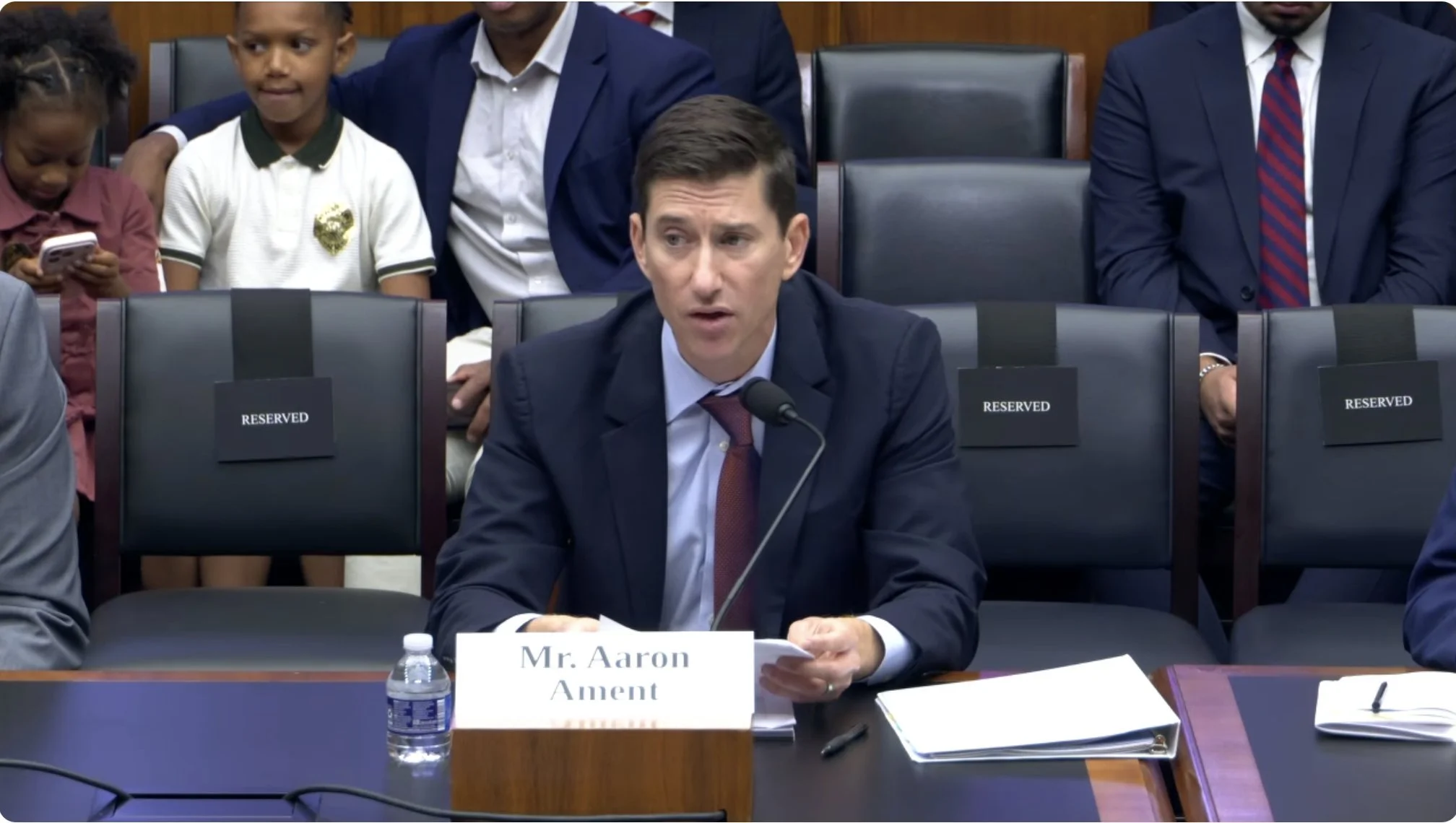
You can watch the full hearing here, and you can read Aaron’s written testimony here.
Watch Aaron’s opening remarks here, and read them below:
Chairman Owens, Ranking Member Adams, and Members of the Committee, thank you for the invitation to testify today. My name is Aaron Ament, and I am the President of the National Student Legal Defense Network (“Student Defense”), a non-partisan, non-profit organization that works to advance students’ rights to educational opportunity and to ensure that higher education provides a launching point for economic mobility.
I deeply appreciate the opportunity to testify today about the critical issues facing our nation’s students.
As a diehard college sports fan, scholarships can certainly feel like a matter of life and death in my household. But I think it’s important to remember that scholarship athletes represent approximately 1 percent of American college students.
Meanwhile, tens of millions of students and student loan borrowers are trapped in a snowballing crisis that is worsening every day during the Trump Administration.
Over the past three decades, average tuition and fees at public four-year colleges have roughly doubled after adjusting for inflation. Tuition at private four-year colleges has climbed almost as much.
Students and parents borrowed more than $100 billion for the 2024-2025 school year alone. Too often these loans are used to attend programs—especially at for-profit colleges—with low graduation rates and poor outcomes.
During the Covid pandemic, federal loan payments were paused. The return to repayment has led approximately 9 million student borrowers into default.
In short, students are increasingly taking on debt they’ll never be able to repay.
Rather than confronting this crisis head-on, the Trump Administration has made it worse at nearly every turn.
According to the Federal Reserve, 35% of current student borrowers who attended for-profit institutions were behind on student loan payments. That’s more than double the rate for public and nonprofit colleges.
Previous administrations attempted to halt the flow of federal dollars to for-profit and career-oriented programs whose graduates don’t earn enough to pay back their loans through regulations known as Gainful Employment Rules. The Trump Administration gutted those efforts.
At a time when Americans are struggling to afford their daily lives, the Trump Administration is poised to resume seizing distressed borrowers’ tax refunds, social security benefits, and wages.
The administration has gutted oversight of schools and relief for defrauded students.
It has attempted to turn the Public Service Loan Forgiveness program into a political football and undermined the government’s promises to millions of teachers, firefighters, nurses, servicemembers, first responders, and other public servants.
And it has sowed chaos and confusion throughout the federal student loan program by eliminating popular repayment options, botching the implementation of student loan provisions in the so-called “Big Beautiful Bill,” and decimating the Office of Federal Student Aid’s customer service capacity.
Each of these missteps has been made worse by the turmoil and disorder at what remains of FSA, and the administration’s obsession with shuttering the Department of Education.
President Trump’s own executive order acknowledged that FSA is grossly understaffed. As the President noted, FSA manages a loan portfolio that is roughly the same size as Wells Fargo’s. Wells Fargo has 200,000 employees. FSA had fewer than 1,500 when Trump took office.
The obvious response to that realization would be to better equip FSA to run the government’s $1.6 trillion student loan portfolio.
Instead, the administration cut it to the bone. Within two months of President Trump’s inauguration, FSA was down to 861 employees.
You didn’t need a crystal ball to see what would happen next. Today, the student loan system is in chaos, and students and families are paying the price.
Congress has the authority, and the responsibility, to demand answers and accountability. Our organization, Student Defense, stands ready to work with this Committee on these issues, and I thank you again for the opportunity to testify today.
